


Knee pain physiotherapy works best when treatment is matched to the likely cause of the pain. Load-related pain, osteoarthritis, and injuries such as meniscal or ligament problems can require different approaches.
If your knee has been painful for some time or your symptoms started suddenly after an activity or injury, understanding the pattern can help determine whether physiotherapy is an appropriate first step or whether you should seek medical assessment first.
This guide from Shanthi Priya, a physiotherapy clinic in Madurai, explains some common causes of knee pain, when physiotherapy may be appropriate and when a doctor or orthopaedic specialist should assess the knee first.
What Are the Common Causes of Knee Pain?
Knee pain can have several possible causes. The location of the pain, how it started, what makes it worse and whether there are other symptoms can all help determine the most appropriate next step.
Load-Related Knee Pain
Load-related knee pain can develop after a sudden increase in walking, running, stair use or other physical activity. It may be felt around the front or side of the knee and can become more noticeable during or after activity.
This pattern is common when someone has recently changed their training routine, started a new sport or increased the amount of walking or standing they do each day.
A physiotherapy assessment can help identify whether changes in activity levels, strength, movement or load management may be contributing to the symptoms.
Knee Osteoarthritis
Knee osteoarthritis involves changes to the structures within the knee joint and becomes more common with age, although it can affect younger adults as well.
Symptoms may include pain, stiffness and difficulty with activities such as walking, climbing stairs or getting up from a chair. Stiffness can be more noticeable after periods of rest and may improve once the joint starts moving.
Symptoms can vary depending on activity levels and other factors. Physiotherapy can be used to help maintain movement, improve strength and support day-to-day function.
Mechanical Knee Problems
Meniscal injuries and ligament injuries can occur following a specific event, such as a twisting movement, sudden change of direction or direct impact.
Depending on the injury, symptoms may include pain, swelling, catching, locking or a feeling of instability. Some injuries require medical assessment or imaging to determine the extent of the problem and whether additional treatment is needed.
A physiotherapist can also assess the knee and advise whether further medical or orthopaedic evaluation is appropriate.
Referred Pain From the Hip or Back
Not all pain felt around the knee originates from the knee itself. Problems affecting the hip or lower back can sometimes cause referred symptoms that are felt further down the leg.
This is one reason a thorough knee pain physiotherapy assessment should consider more than the knee alone, particularly when the symptoms do not clearly match a local knee problem.
Why Does Identifying the Cause Matter?
Different causes of knee pain can require different treatment approaches.
For example, a programme designed to improve strength and gradually increase activity may be appropriate for some load-related conditions, while a knee with significant swelling, instability or mechanical symptoms may require further assessment before progressing with exercise.
The aim of an assessment is therefore not simply to identify where the pain is located. It is to understand how the symptoms started, what affects them and how the knee responds to movement and load.
This allows treatment to be based on the person’s individual presentation rather than a generic set of knee exercises.
When Is Physiotherapy the Right First Step?
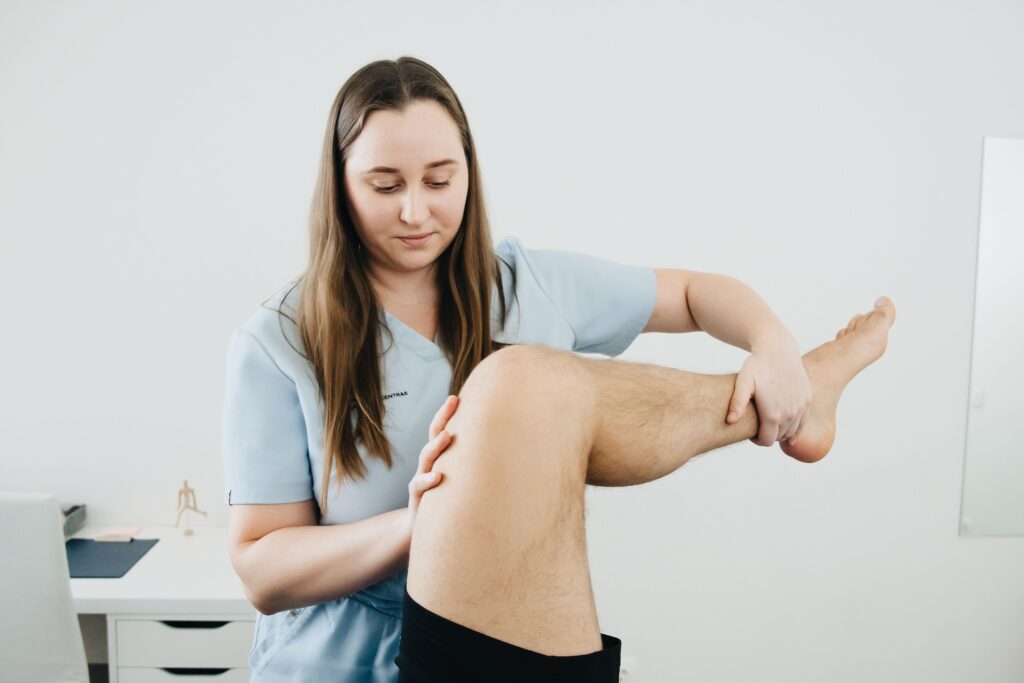
Physiotherapy may be an appropriate starting point when knee pain has developed gradually and there are no significant signs of an acute injury or serious underlying problem.
Physiotherapy, such as through our pain management programme, may be considered when you have:
- Knee pain that developed gradually with activity
- Stiffness that improves after gentle movement
- Pain during activities such as stairs, squatting, walking or running
- No significant instability or repeated episodes of the knee giving way
- No sudden, substantial swelling following an injury
- Symptoms that are affecting activity but do not prevent you from putting weight on the leg
A proper assessment is still important because the same symptom can have different causes in different people.
When Should You Get a Medical or Orthopaedic Assessment First?
Some symptoms may indicate that medical assessment should take priority before beginning a routine physiotherapy programme.
These can include:
- The knee repeatedly locks or catches
- The knee repeatedly gives way or feels significantly unstable
- Sudden or substantial swelling develops after an injury
- You are unable to put weight on the affected leg
- Pain or other symptoms are worsening rapidly
- You have experienced significant trauma to the knee
The appropriate next step depends on the circumstances and severity of the symptoms. A physiotherapist can also advise whether medical or orthopaedic assessment is needed.
What Does a Knee Physiotherapy Assessment Involve?
A knee pain physiotherapy assessment typically begins with a detailed discussion about how and when the symptoms started. The physiotherapist may ask about activities that increase or reduce the pain, previous injuries and how the symptoms affect everyday activities.
The physical assessment may then look at:
- Knee movement
- Muscle strength
- Swelling or tenderness
- Balance and movement control
- How the knee responds to different loads
- Functional movements such as squatting or stepping down
- Walking and other relevant activities
The hip and lower back may also be assessed when the symptoms suggest that pain could be referred from another area.
This process helps the physiotherapist understand what may be contributing to the knee symptoms and whether physiotherapy is appropriate.
What Can Knee Pain Physiotherapy Involve?
Treatment depends on the assessment findings and the person’s goals. Depending on the cause of the pain, physiotherapy may include:
- Strengthening exercises for the muscles supporting the knee
- Mobility exercises
- Balance and movement-control exercises
- Gradual increases in physical activity
- Advice on managing training or activity loads
- Functional exercises based on everyday activities
- Guidance for returning to exercise or sport
- A home exercise programme
The programme can be adjusted as symptoms and physical function change.
Getting Started With Knee Pain Physiotherapy
Knee pain that keeps returning or is affecting your daily activities is worth having properly assessed rather than managing through trial and error.
An assessment can help determine whether the symptoms are likely to respond to physiotherapy, whether the programme needs to be modified around your current activity levels, or whether further medical assessment is appropriate.
If you are unsure whether physiotherapy is the right starting point for your knee, you can book a consultation to discuss your symptoms and get started with an assessment.
Frequently Asked Questions
Does physiotherapy help knee osteoarthritis?
Yes. Physiotherapy is commonly used to help people with knee osteoarthritis improve strength, maintain movement and manage symptoms. It does not reverse the underlying structural changes associated with osteoarthritis.
Can physiotherapy fix a torn meniscus?
Physiotherapy can help improve strength, movement and function and may help manage symptoms associated with some meniscal injuries. Whether further treatment is required depends on factors such as the type of tear, symptoms and clinical assessment.
When should I see a doctor for knee pain?
Medical assessment may be appropriate if your knee locks, repeatedly gives way, develops substantial swelling after an injury, you cannot put weight on the leg, or your symptoms are worsening quickly.
Why does my knee hurt more going down stairs than going up?
Pain that is more noticeable when going downstairs can occur with certain types of knee pain, including problems involving the structures around the kneecap. However, the symptom alone cannot identify the cause. An assessment can help determine which structures may be contributing to the pain.
Can hip or back problems cause knee pain?
Yes. Problems affecting the hip or lower back can sometimes cause referred pain that is felt around the knee. This is why a thorough assessment may examine the hip and lower back as well as the knee.
How soon after a knee injury should I start physiotherapy?
The appropriate timing depends on the type and severity of the injury. Some injuries can benefit from early physiotherapy, while others may require medical or orthopaedic assessment first. A physiotherapist can advise on the appropriate next step after assessing the injury.
Is it normal for knee pain to come and go?
Knee pain can fluctuate depending on activity levels and the underlying cause. However, recurring pain is worth assessing, particularly if it is affecting your mobility, exercise or daily activities.

- Knee Pain: When Physiotherapy Helps, and When You Need Something Else First - October 8, 2026
- Cervical Spondylosis Physiotherapy in Madurai: What It Does and What It Cannot Do - October 8, 2026
- Postnatal Physiotherapy: A Complete Recovery Timeline for New Mothers - September 16, 2026