


If you spend your day at a desk, on a two-wheeler commute, or bent over a phone, back and neck pain can creep up without warning. The good news is that many cases respond well to simple, targeted exercises. Below, our physiotherapy team at Shanthi Priya Clinic in Madurai shares 10 movements commonly used to ease back and neck pain and prevent it from returning.
Before you begin, a quick note. These exercises are general guidance for mild to moderate discomfort. If your pain is severe, spreads down an arm or leg, or comes with numbness, please get assessed by a physiotherapist before starting any routine.
1. Chin Tucks
Sit tall and gently draw your chin backwards, as if making a double chin, without tilting your head down. Hold for 5 seconds and repeat 10 times. This strengthens the deep neck muscles that support posture.
2. Neck Rotation Stretch
Slowly turn your head to look over one shoulder until you feel a gentle stretch. Hold for 15 to 20 seconds, then repeat on the other side. This helps restore the range of motion after stiffness.
3. Shoulder Blade Squeeze
Sit or stand upright and pull your shoulder blades together as though holding a pencil between them. Hold for 5 seconds and release. This counters the rounded posture caused by long hours of screen use.
4. Cat-Cow Stretch
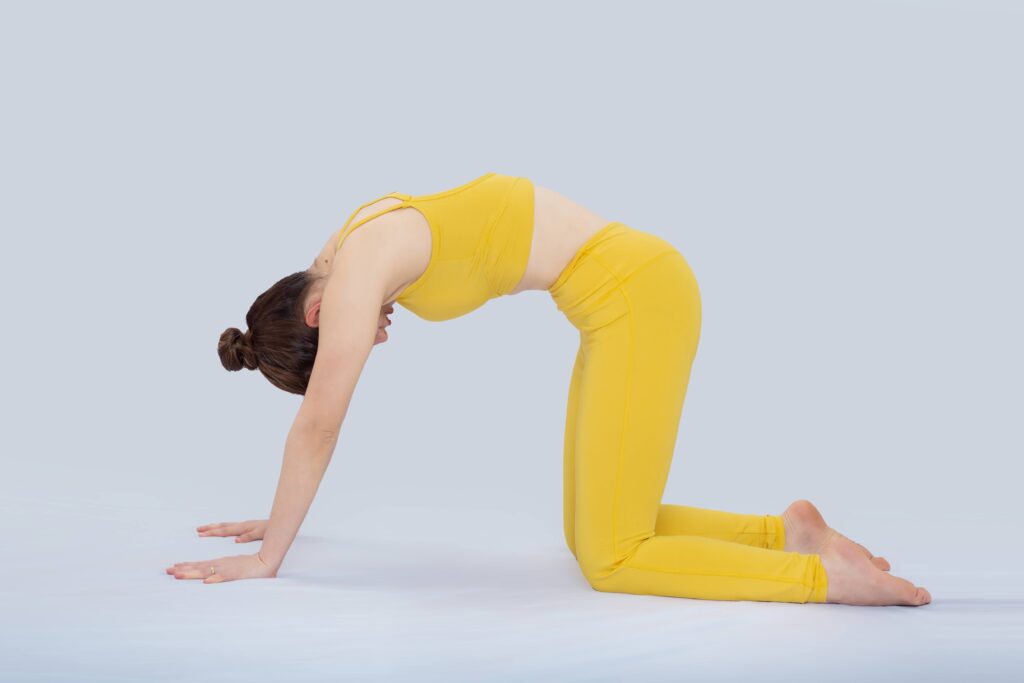
On your hands and knees, alternate between arching your back upward and dipping it downward in a slow, controlled motion. This mobilises the entire spine, from the neck to the lower back.
5. Knee-to-Chest Stretch
Lying on your back with knees bent, pull one knee toward your chest and hold for 20 to 30 seconds. Switch legs. This gently stretches the lower back and glutes.
6. Pelvic Tilts
Lie on your back with knees bent and feet flat. Tighten your abdominal muscles to flatten your lower back against the floor, hold for 5 seconds, then release. This builds core control that protects the spine.
7. Bridges
From the same position, lift your hips toward the ceiling until your body forms a straight line from shoulders to knees. Hold for a few seconds and lower slowly. Bridges strengthen the glutes and lower back together.
8. Child’s Pose
Kneel and sit back onto your heels, stretching your arms forward on the floor. This is a gentle way to decompress the lower back after a long day.
9. Seated Spinal Twist
Sit upright, place one hand on the opposite knee, and gently twist your torso, looking over your shoulder. Hold for 15 seconds and switch sides. This improves mobility through the mid and lower back.
10. Wall Angels
Stand with your back against a wall, arms bent at 90 degrees. Slowly slide your arms up and down while keeping them in contact with the wall. This strengthens the upper back muscles that support good posture.
How Often Should You Do These Exercises
Most physiotherapists recommend 10 to 15 minutes of gentle movement, 3 to 5 times a week, alongside posture awareness during the day. Consistency brings better results than doing an intense session once in a while.
When Exercise Alone Is Not Enough
Home exercises help with general stiffness and mild discomfort, but they cannot replace a proper diagnosis. Conditions such as a disc bulge, sciatica or cervical spondylosis often need a structured treatment plan that includes manual therapy, posture correction and, in some cases, targeted equipment-based rehabilitation.
At Shanthi Priya Physiotherapy Clinic in KK Nagar, Madurai, our team, led by principal physiotherapist Vinodh Antony, has helped thousands of patients recover from back and neck pain through personalised, evidence-based care. If these exercises do not bring relief within a couple of weeks, or if your pain is getting worse, it is time for a professional assessment. Visit our back and neck wellness page to learn more about our approach, or call us to book a consultation.
Simple Habits to Prevent Back and Neck Pain at Work

Exercises help you recover, but daily habits determine whether pain comes back. A few small changes can make a real difference over time.
- Set your screen at eye level so you are not constantly tilting your neck downward
- Take a short standing or walking break every 45 to 60 minutes
- Use a chair that supports the natural curve of your lower back
- Keep your phone at eye level rather than looking down for long periods
- Avoid carrying a heavy bag on one shoulder every day
None of these habits requires special equipment, and together with regular movement, they go a long way in keeping back and neck pain from becoming a recurring problem. If you’re struggling with ongoing back or neck pain, contact our team to book a consultation and receive personalised physiotherapy care.
Frequently Asked Questions
Can I do these exercises if I have a herniated disc?
Some of these stretches may not be suitable if you have a diagnosed disc issue. It is best to have a physiotherapist confirm which exercises are safe for your specific condition.
How long does it take to feel relief from neck pain exercises?
Many people notice reduced stiffness within one to two weeks of consistent practice, though full recovery timelines vary based on the underlying cause.
Is it normal to feel sore after starting these exercises?
Mild soreness for a day or two is common when you begin a new routine. Sharp or worsening pain is not normal and should be checked by a physiotherapist.
Should I stretch or strengthen first for back pain?
Gentle stretching is usually a safe starting point, with strengthening added gradually as your pain improves. A physiotherapist can guide the right sequence for your condition.
Can poor posture at work really cause long-term back or neck problems?
Yes. Sustained poor posture places ongoing strain on muscles and joints, which can lead to chronic pain over time if left uncorrected.

- Knee Pain: When Physiotherapy Helps, and When You Need Something Else First - October 8, 2026
- Cervical Spondylosis Physiotherapy in Madurai: What It Does and What It Cannot Do - October 8, 2026
- Postnatal Physiotherapy: A Complete Recovery Timeline for New Mothers - September 16, 2026